“Best X” and Comparison Pages for High-Ticket Brands: Winning the Research Phase
Buyers spending $3,000 on a pool table, grill, greenhouse or sauna read comparisons before they buy. How to build honest "best X" and "X vs Y" pages that rank, get cited by AI assistants and close sales.

- Published
- Updated
- Read
- 7 min
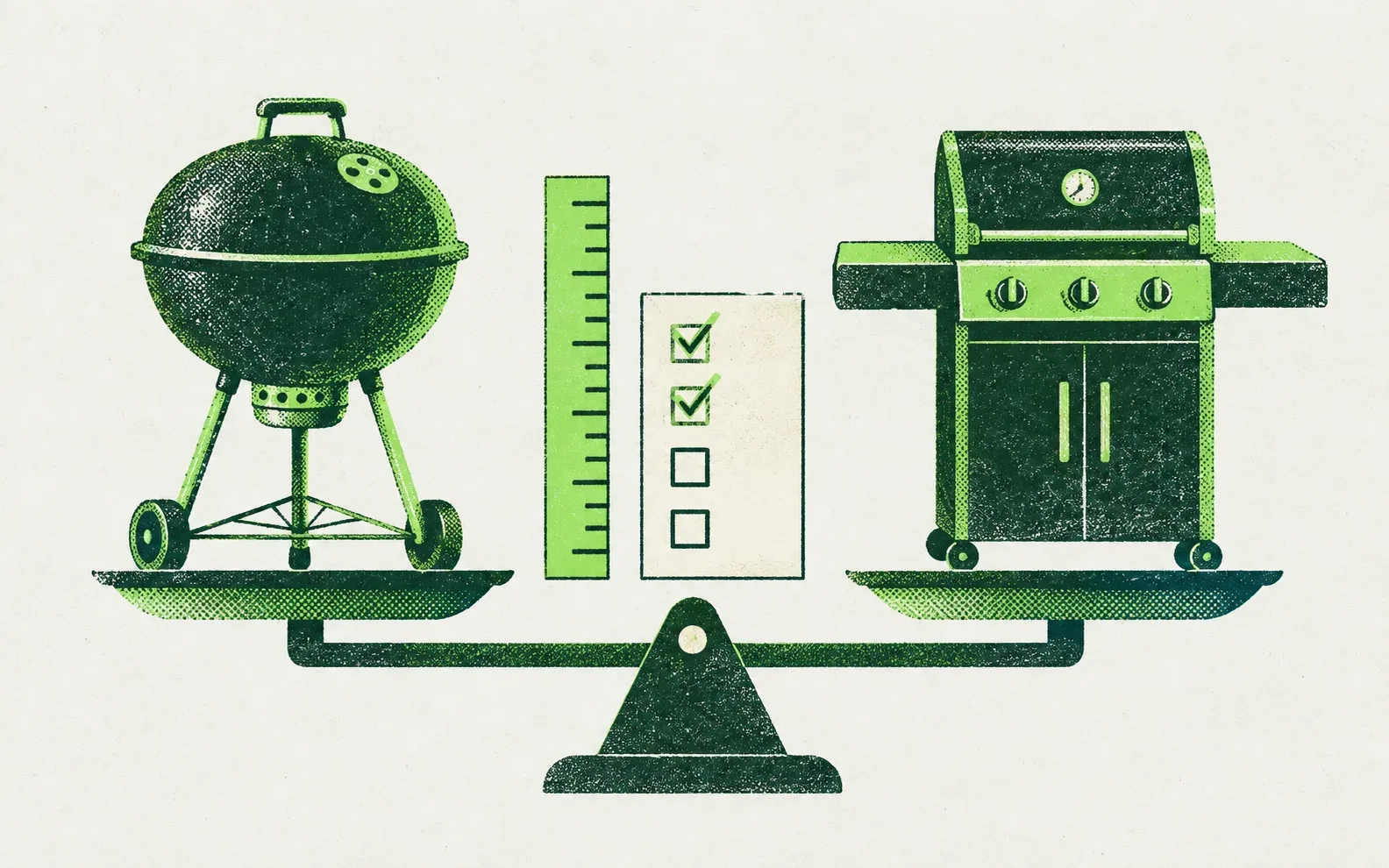
- High-ticket buyers compare before they buy. If your store has no comparison pages, those buyers do their research on sites that recommend your competitors.
- Honest comparisons that name competitors and admit where they win are more believable to buyers, align with Google’s guidance on reviews, and are more likely to be cited by AI assistants.
- Say who each option is best for. "Best for small rooms" or "best for cold climates" is the sentence both buyers and AI answers quote.
- Comparison pages need an author, a date, a methodology and a table; schema adds Article, BreadcrumbList and ItemList, never fake Offers for competitor products.
- Nick, who runs a high-ticket medical equipment store, sold a $130,000 unit from a single keyword moved from page 3 to page 1.
Nobody buys a $4,000 slate pool table, a $3,000 pellet grill or a $9,000 barrel sauna after one visit. They read. They compare types, brands and models. They ask ChatGPT which one is best for a small garage or a cold climate. Then they buy from the store that helped them decide.
That research phase is where high-ticket brands win or lose, and comparison pages are its most important format. This guide covers the types of comparison page worth building, how to make them honest and useful, the schema to use, and how AI assistants read them.
Why comparison pages close high-ticket sales#
For a $30 product, the path is search, click, buy. For a $3,000 product it looks more like this:
- Problem: "how big a room do I need for a pool table"
- Options: "slate vs MDF pool table", "infrared vs traditional sauna"
- Shortlist: "best 8 ft pool tables", "best pellet grills under $2,000"
- Brand check: "[brand A] vs [brand B]", "[brand] reviews"
- Purchase: brand or model name, often on a collection or product page
Steps 2 to 4 are all comparison searches. If your store doesn't answer them, an affiliate site, a forum thread or a competitor's guide does, and it sends the buyer somewhere else. Our SEO for high-ticket brands post covers the whole journey; this one is about the middle.
Four comparison page types#
| Type | Example searches | What the page does |
|---|---|---|
| Type vs type | "slate vs MDF pool table", "kamado vs pellet grill", "polycarbonate vs glass greenhouse", "infrared vs traditional sauna" | Explains the trade-offs between categories |
| Best X for Y | "best pool table for small rooms", "best greenhouse for windy areas", "best outdoor sauna for cold climates" | Recommends options for a specific situation |
| Brand vs brand | "[your brand] vs [competitor]" | Compares you with a named rival, honestly |
| Alternatives | "[competitor] alternatives" | Lists options for buyers leaving a competitor |
Type-vs-type pages are the easiest place to start. They don't require you to criticize anyone, they attract links, and they feed buyers into your collections.
Rule one: be honest, including about competitors#
The instinct is to write a comparison where your product wins every row. Buyers see through that immediately, and so do the systems that decide what ranks and what gets cited.
Google's guidance on writing high-quality reviews asks for exactly what honest comparisons contain: explain what sets a product apart from competitors, say why something is the best for a given purpose with first-hand evidence, and discuss benefits and drawbacks based on your own research. It even suggests linking to multiple sellers where that serves the reader.
In practice, for a brand writing about its own category:
- Include competitors that genuinely belong on the list, even when they're good.
- Say where they win. "If you want the lowest price for a slate table, Brand B is hard to beat."
- Say who your product isn't for. "Our barrel saunas need a 240V circuit; if you can't add one, look at plug-in infrared models."
- Disclose that you're the seller. A single line at the top is enough: "We make [brand]. Here's how we compare, including where others are better."
This isn't charity. A buyer who trusts your comparison trusts your recommendation, and a page that admits trade-offs gives AI assistants a quotable, balanced source.
Anatomy of a comparison page that ranks and gets cited#
These are the components we build into every comparison page:
| Component | Why it matters |
|---|---|
| A direct answer in the first 100 words | Buyers skim; AI answers lift the first clear statement |
| Author with real expertise, and a date | Shows the page is maintained and written by someone who knows |
| A short methodology | "We compared published specs, warranty terms and our own install experience" |
| A comparison table | The most scannable and most quoted element on the page |
| "Best for" verdicts | "Best for small rooms", "best for cold climates", "best on a budget" |
| Pros and cons for each option | Balanced, specific, based on real use |
| Original photos and test data | Evidence only you have |
| FAQs from real buyer questions | Captures long-tail searches and pre-sales objections |
| Links into collections and products | Turns research traffic into revenue |
Example: what a good comparison table looks like#
For "infrared vs traditional sauna", the table should cover what buyers actually weigh, in plain numbers where possible:
| Traditional (Finnish) sauna | Infrared sauna | |
|---|---|---|
| Typical air temperature | Around 150–195°F (65–90°C) | Around 120–140°F (50–60°C) |
| How it heats | Heats the air, often with löyly (steam from water on stones) | Infrared panels warm the body more directly |
| Warm-up time | Longer | Shorter |
| Electrical needs | Heaters often need a dedicated 240V circuit | Many smaller units run on standard household power |
| Best for | People who want the classic hot, humid experience | People who prefer lower heat or a simpler install |
Specs vary by model, so each row on a real page links to the products that back it up. The same structure works for slate vs MDF pool tables (flatness, weight, lifespan, price), kamado vs pellet grills (fuel, temperature control, power needs, maintenance) and polycarbonate vs glass greenhouses (insulation, light, breakage, cost).
Where comparison pages live on Shopify#
- Blog articles suit type-vs-type and "best X for Y" pages. They get the article template, author and date by default.
- Pages (
/pages/) suit evergreen brand-vs-brand pages you want in the main navigation or footer. - Collections can carry a short comparison block below the grid, linking to the full article. That helps the collection answer "which one should I get" without turning it into a blog post.
Every comparison page should link to the collections it discusses, and those collections should link back. Our guide to Shopify collection page SEO covers the linking pattern.
Schema for comparison pages#
Comparison pages are articles, not product pages, and the markup should say so.
- Article (or BlogPosting) with a real author, datePublished and dateModified.
- BreadcrumbList to show where the page sits in the site.
- ItemList for "best X" roundups, listing the products in order.
- Product with Offer only for your own products, on your own product pages, with the price visitors see. Don't mark up competitor products with prices you don't control.
- FAQPage is still valid markup, but since August 2023 Google shows FAQ rich results mainly for well-known government and health sites. Use it for clarity, not for a rich result.
A simple ItemList for a roundup:
{
  "@context": "https://schema.org",
  "@type": "ItemList",
  "name": "Best 8 ft Slate Pool Tables",
  "itemListOrder": "https://schema.org/ItemListOrderAscending",
  "itemListElement": [
    { "@type": "ListItem", "position": 1, "name": "Example Classic 8 ft", "url": "https://www.example.com/products/classic-8ft" },
    { "@type": "ListItem", "position": 2, "name": "Example Compact 8 ft", "url": "https://www.example.com/products/compact-8ft" },
    { "@type": "ListItem", "position": 3, "name": "Competitor Pro 8 ft", "url": "https://www.competitor.com/pro-8ft" }
  ]
}
Our schema markup service covers the Product and Merchant Center side.
How AI answers use comparison pages#
Ask ChatGPT, Perplexity or Google's AI Mode "what's the best pool table for a small basement" and the answer is built from pages that already compare options. Google has described AI Mode breaking one question into many related searches (it calls this query fan-out), which means a single buyer question can pull from "best X", "X vs Y" and sizing guides at once.
What gets a comparison page cited:
- Clear "best for" statements that can be lifted as a sentence.
- Tables with specific numbers, not "great value" and "premium quality".
- Balance. A page that names competitors and trade-offs reads as a source; a page where the author's product wins every row reads as an ad.
- Consistency with the rest of the web. If your specs, prices and warranty terms match your product pages, Merchant Center feed and third-party reviews, AI systems can trust them.
We cover this further in how to rank in ChatGPT and on our GEO agency page.
Mistakes that sink comparison pages#
| Mistake | What happens | Fix |
|---|---|---|
| Your product wins every row | Buyers and AI assistants read it as an ad | Name trade-offs and say where others win |
| Vague criteria | "Quality" and "value" can't be compared or quoted | Use numbers: weight, warranty years, wattage, dimensions |
| No date, never updated | Old models and prices undermine trust | Show "Updated" dates and review quarterly |
| Thin roundups | Ten products, two sentences each | Fewer options, each with a real verdict and evidence |
| No links to buy | Research traffic never reaches a collection | Link each option to its product or collection |
| Copying competitor specs without checking | Wrong claims about a named rival | Cite the source and verify before publishing |
Keeping comparison pages current#
High-ticket categories change slowly, but they do change: new model years, price rises, discontinued products and new competitors. We review comparison pages every quarter, update the table and the "Updated" date, and add a short changelog line when something material changes ("March 2026: added the 2026 model, removed the discontinued Compact"). Keep dateModified in the Article schema in step with the visible date. A current, well-maintained page keeps earning links and citations long after a stale one has dropped.
Which comparisons to write first#
Start where buyers already are:
- Search Console queries containing "vs", "best", "or", "alternative" and "review" where you already get impressions.
- Sales and support questions. "Should I get the 7 or 8 foot?" "Is infrared as good?" Your team hears them every day.
- Page one of Google. Look at who ranks for "best [category]" and what format wins. Zack's rule holds: Google shows you exactly what it rewards.
- AI answers. Ask ChatGPT and Perplexity the questions your buyers ask and note which sites get cited. Those are the pages you need to beat, or the sites you need mentions on.
A realistic first batch for a pool table brand might be "slate vs MDF pool tables", "what size pool table for my room" (for an 8 ft table with standard 58-inch cues, that's roughly 13 by 17 feet), "best pool tables for small rooms" and one honest brand-vs-brand page against your closest rival. Sizing and buying guides pair naturally with comparisons; our high-ticket buying guides post covers them.
What this is worth#
One high-ticket sale can pay for months of content. Nick, who runs a high-ticket medical equipment store in Austin, sold a $130,000 unit from a keyword we moved from page 3 to page 1, and his store picked up 7,000 high-value keywords in under two months.
Comparison pages are where that kind of buyer makes the decision. Build them honestly, keep them current and link them into the collections that sell. If you want to see how this fits your category, our industry pages cover pool tables and game rooms, grills and outdoor kitchens, greenhouses and saunas, hot tubs and cold plunges.
Questions people ask about this
Should a brand include competitors in its own "best X" page?
Yes, when they genuinely belong there. A list where only your products appear reads as an ad to buyers and gives AI assistants little reason to cite it. Including strong competitors, saying where they win and disclosing that you are the seller makes the page more credible, and your recommendations for specific situations become more persuasive as a result.
Is it legal to compare my products with named competitors?
Comparative advertising is generally allowed in the US when claims are truthful, not misleading and can be substantiated. Use competitors’ published specs, cite sources, date the page and update it when models change. Rules differ by country, including in the EU, so have claims about named competitors reviewed if you are unsure.
What schema should a comparison page use?
Article or BlogPosting with a real author and dates, BreadcrumbList, and ItemList for ranked roundups. Keep Product and Offer markup for your own product pages, using the price visitors see. FAQPage markup is valid, but Google has shown FAQ rich results mainly for well-known government and health sites since August 2023.
How do comparison pages help with ChatGPT and AI Overviews?
AI answers to "which is best" questions are built from pages that already compare options. Clear "best for" statements, tables with specific numbers and balanced pros and cons are easy to extract and cite. Keeping specs and prices consistent between your comparison pages, product pages and Merchant Center feed helps AI systems trust them.
How many comparison pages does a high-ticket store need?
Start with three to five: two or three type-vs-type pages for your category, one "best X for Y" page for your strongest use case and one brand-vs-brand page against your closest competitor. Then expand based on Search Console queries and sales questions. Most high-ticket niches support dozens of useful comparisons over time.
Want this done on your store?
Shopify SEO for brands selling $1,000+ products: collection pages by size, use and material, buying guides, comparisons, reviews, and the delivery and financing content that closes long research journeys.
More from High-ticket brands

Linkable Assets for Shopify: Calculators That Earn Links for High-Ticket Brands
For a store selling $3,000 pool tables or $8,000 saunas, the linkable asset that works best is usually a calculator that answers the buyer's math question. Here is which calculators to build, how to build them on Shopify so Google can read them, and how to promote them.

Reviews SEO When You Sell 20 a Month: Building Proof for High-Ticket Products
Reviews SEO advice assumes thousands of reviews. A store selling 20 units a month at $4,000 each needs a different plan: crawlable reviews, correct schema, and proof that doesn't depend on volume.
Product Page SEO for High-Ticket Items: Spec Tables, Comparisons and FAQs That Close
A $6,000 pool table or sauna page has to answer every question a buyer would ask a salesperson. Here is how we structure high-ticket Shopify product pages: specs, delivery, financing, warranty, comparisons and schema.